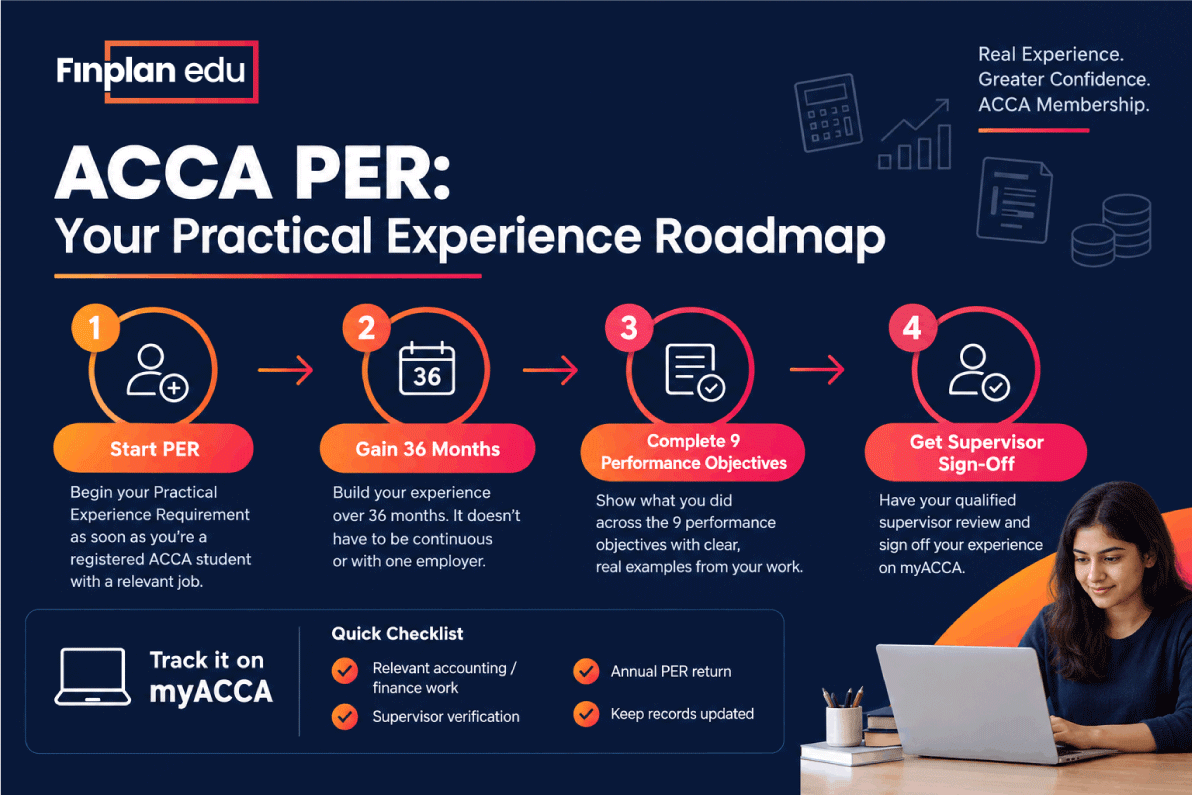

PER stands for Practical Experience Requirement, ACCA's way of checking that you can apply what the syllabus taught you. Full membership needs three things: your exams, the Ethics and Professional Skills Module, and 36 months of relevant work experience signed off by a supervisor. The 36 months is the headline number, but time alone is not enough. Across those years you also demonstrate nine performance objectives, short written statements describing what you did at work. Without a completed PER you can pass every paper and still not use the ACCA letters after your name. The reasoning is simple: employers hire ACCA members because the qualification signals workplace competence, not exam skill. Usefully, PER runs alongside your studies, so it adds nothing to the end of your journey.
ACCA PER Examples Explained: Requirements, myACCA Steps and Approval Checklist
Most ACCA students pour their energy into exams, and then near the final papers a question shows up: what is this PER thing, and have I fallen behind? The Practical Experience Requirement is the part of ACCA that proves you can do the job, not just answer questions about it. It sits alongside your exams and the Ethics and Professional Skills Module as one of three boxes you tick for membership. This guide covers what counts as experience, how to record it on myACCA, who signs it off, and the mistakes that delay people.