
Your Global Finance Career is Loading…

ACCA + Financial Modeling: Does It Help A Financial Analyst

A finance degree or any professional qualification can help you understand financial statements. But employers also want to analyse numbers and explain what they mean. Here is where financial modelling becomes very useful. It helps you turn financial information into forecasts, business scenarios and valuation estimates. For graduates and MBA Finance freshers combining ACCA with a financial modeling course may be a useful way to prepare for financial analyst roles. ACCA builds accounting and finance knowledge while practical modelling helps you apply those knowledge to business problems. But do you actually need it both? The answer depends on certain stuffs. Let’s look at how the two fit together and what you should learn before applying for jobs.
Quick Snippets

ACCA + Financial Modeling by Finplan Edu

Key Takeaways

  • ACCA provides a broad foundation in accounting as well as financial management and performance analysis.

  • Financial modelling adds practical skills for forecasting and evaluating business performance.

  • Financial analyst is someone who works in corporate finance, investment research, banking, financial planning or business reporting.

  • ACCA and financial modelling can complement each other but none of those guarantees a job or a particular salary.

  • Before choosing a financial modeling certification review the syllabus and practical exercises, instructor support and total cost.

What Is Financial Modelling & Why Does It Matter

Financial modelling is one process of building a structured representation of a company’s financial performance. It usually uses spreadsheets as well as historical financial statements and assumptions about future business activity. 

Analysts use these models to estimate revenue and expenses, cash flow and other financial measures. They then can test how different business conditions may affect the results.

Financial Modelling Meaning In Everyday Work

The financial modeling meaning is easier to understand when you see how it connects financial data with a business question. It is not simply about entering formulas into Excel. 

A useful model has clear assumptions along with logical calculations and outputs that another person can review. The results will only be as dependable as the data and assumptions behind it.

The CFA Institute explains that financial models support forecasting, analysis and decision making across areas such as corporate finance, investment research and asset management.

What Does A Financial Analyst Do

A financial analyst basically studies financial and business information to help an organisation make informed decisions. The work may involve reviewing financial statements along with preparing forecasts as well as analysing performance or assessing investment opportunities. 

Responsibilities depend on the employer and the team in which the analyst works. Some roles focus on a company's internal finances while others evaluate businesses or markets or investments.

ACCA notes that financial analysts need to consider more than figures including economic conditions and industry trends. It also identifies opportunities across corporate and public sectors, financial services and shared service organisations.

Financial analyst role

Typical work

Useful modelling application

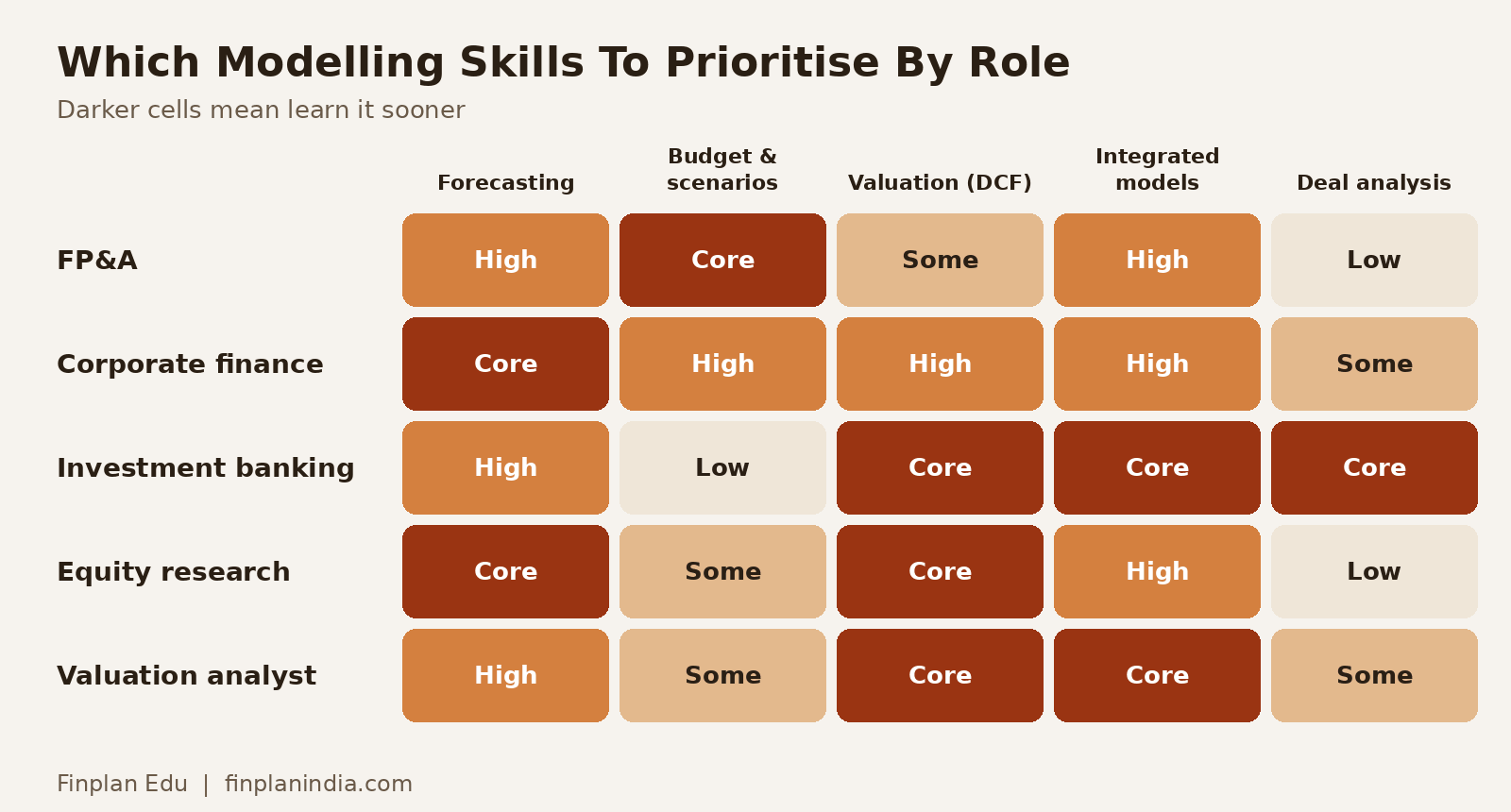
Corporate finance analyst

Reviews company performance and financial plans

Forecasting revenue, costs and cash flow

Investment banking analyst

Supports transactions, financial analysis and deal work

Valuation models and transaction analysis

Equity research analyst

Studies companies and investment prospects

Earnings forecasts and company valuation

FP&A analyst

Supports budgets, forecasts and performance reviews

Budget models and scenario analysis

Valuation analyst

Estimates the value of businesses or assets

Discounted cash flow and comparable company analysis


What Does A Financial Analyst Do

Skills You Need To Build While Doing ACCA

ACCA can help you develop a strong foundation in accounting as well as financial management and business performance. However understanding finance concepts and applying them in a spreadsheet are different skills. 

Employers may expect candidates to work with data as well as check assumptions and communicate findings clearly. Practical exercises can help you bridge that gap before entering the job market.

Focus on developing these financial analyst skills:

  • Excel proficiency - Learn formulas, lookup functions, pivot tables and spreadsheet organisation. These tools help you analyse data efficiently and reduce avoidable errors

  • Financial statement analysis - Understand how the income statement, balance sheet and cash flow statement connect. This helps you identify what drives a company's results and financial position 

  • Forecasting and modelling - Practise projecting revenue, costs and cash flow using clear assumptions. Learn to test unique scenarios rather than depending on a single forecast.

  • Valuation fundamentals - Understand methods such as discounted cash flow and comparable company analysis if you are targeting valuation or investment related roles. You should also learn the limitations of each method 

  • Communication and attention to detail - Explain what your analysis shows, where uncertainty exists and why the result matters. Check formulas, sources and assumptions before presenting your findings

You do not need to master every single advanced technique at the beginning. Start with financial statements and Excel and then build a simple model for a company you understand. Once you can explain how the assumptions affect the result then move on to more complex forecasts or valuation methods.

How ACCA And Financial Modelling Complement Each Other

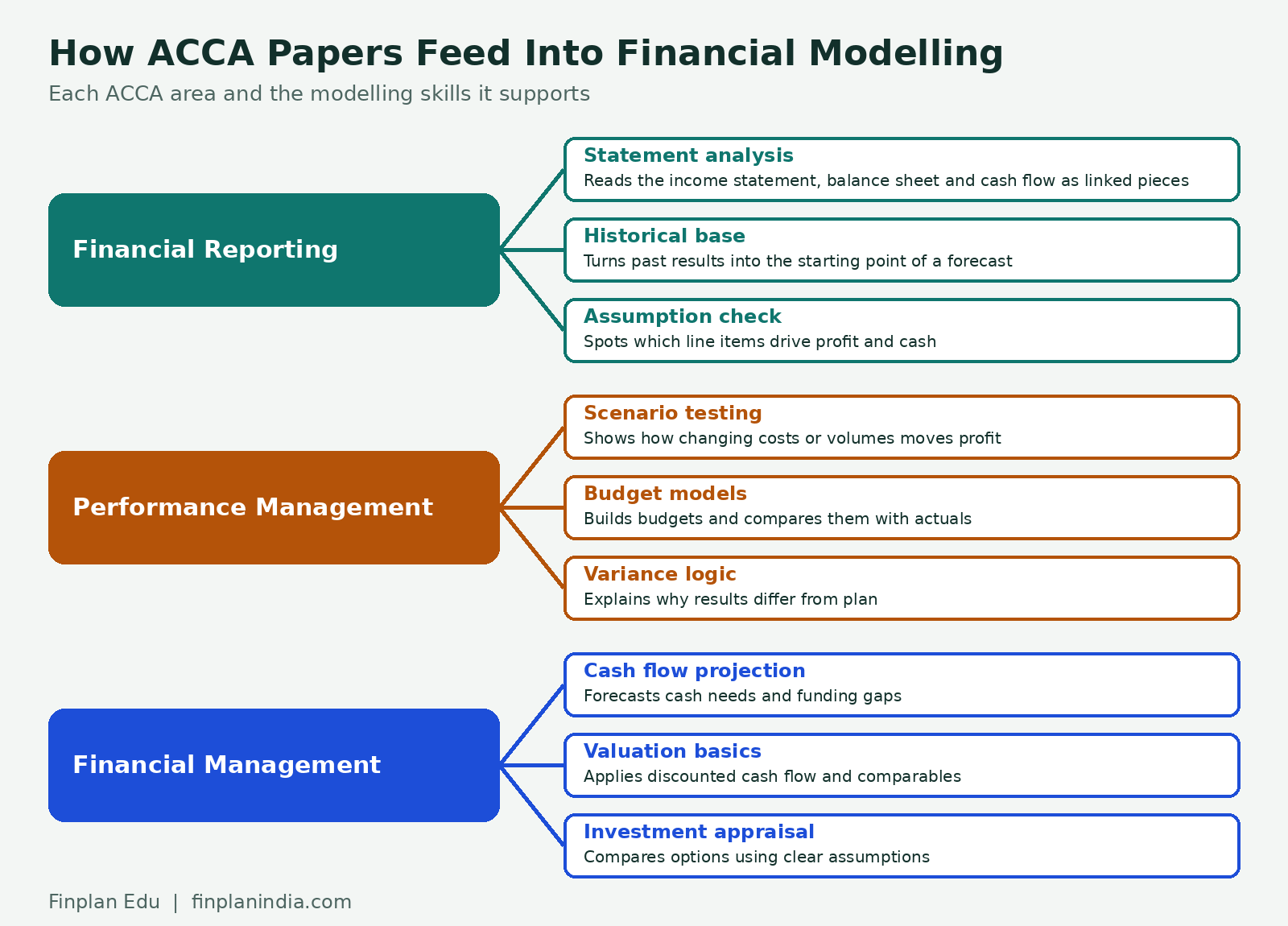
ACCA and financial modelling serve different purposes. ACCA is a professional accountancy qualification that develops knowledge across areas like financial reporting and performance management and financial management. 

Financial modelling is one practical skill used to represent financial information and estimate future results and evaluate possible outcomes. Studying both can help you connect accounting knowledge with the work performed in analyst roles.

For example, financial reporting knowledge helps you understand the numbers in a company's statements. Modelling skills help you use those numbers to forecast future performance. 

If a company has rising expenses you can estimate how different cost assumptions may affect its future profit. The combination is useful when the role requires both financial understanding and hands on analysis.

Area

What ACCA Can Help You Learn

What Financial Modelling Practice Adds

Financial statements

How financial information is prepared and interpreted

How historical results feed into forecasts

Performance analysis

How to evaluate business results

How to quantify the effect of changing assumptions

Financial management

Concepts related to financial decisions and resources

Practical cash flow projections and scenario testing

Business decisions

A structured understanding of finance and business

Models that help compare possible outcomes

Valuation-related work

Relevant finance foundations depending on the papers studied

Practical application of valuation methods in a model


The combination is not equally necessary for every job. Some entry level accounting or reporting roles may not require advanced financial modelling while valuation and investment banking positions may place greater emphasis on it. 

ACCA alone may be sufficient for some roles depending on the employer's requirements and your experience. A modelling course can be a useful addition if it addresses a clear skill gap.

How ACCA And Financial Modelling Complement Each Other

Which Financial Modeling Course Should You Choose

A financial modeling course should teach you how to build and check models not just explain the theory behind them. The right option depends on your current knowledge and career target. 

A beginner may need Excel and financial statement basics first while someone with a finance background may be ready for integrated models and valuation. Check the syllabus carefully before paying for a course.

What Should A Good Course Cover

  • Look for practical exercises involving real or realistic business information.

  • A course focused on financial modeling and valuation may include financial statement analysis, integrated forecasts, discounted cash flow valuation and comparable company. analysis 

  • Before enrolling, check whether you will build models yourself and receive feedback on your work.

  • A certificate can show that you completed a programme but your ability to explain and defend a model is more useful in a technical interview.

  • Also compare the course fee structure along with duration, access period and any assessment requirements.


How To Prepare For Financial Modeling Jobs

If you are a graduate or MBA Finance fresher you can begin preparing for financial modeling jobs before you have full time analyst experience. 

Start with the financial concepts you already know and apply them to practical exercises. Build a small portfolio that shows your ability to work with financial statements and assumptions and forecasts. This gives you concrete examples to discuss during interviews.

Use the following steps to organise your preparation:

  • Choose a target role - Decide whether you are more interested in corporate finance, FP&A, investment banking, equity research or valuation. Different roles require different levels of modelling and technical knowledge

  • Strengthen the basics - Review accounting, financial statements and Excel before attempting complex models. A clear understanding of the inputs makes it easier to find errors later

  • Build a sample model - Use publicly available company information to prepare a basic forecast or valuation. Clearly label your assumptions and note where estimates may be uncertain

  • Practise explaining your work - Prepare a short summary of the business, your assumptions and the model's main findings. Interviewers may want to understand your reasoning, not just see the final spreadsheet

  • Compare courses and certifications - Review course content, handson assignments and assessment methods before choosing a financial modeling certification. A financial modeling course free of charge can be useful for introductory learning but check whether it covers enough practical work for your goals

You should also read the employer’s job descriptions thoroughly for the roles you would like to join. Note the tools and qualifications and technical skills mentioned repeatedly. This will help you decide whether your next step should be ACCA study or modelling practice or an additional specialised course.


Is ACCA + Financial Modelling The Right Choice for You

This combination can be a sensible option if you want to pursue a financial analyst career and need both finance knowledge and practical spreadsheet skills. 

ACCA may be particularly relevant if you want a broader accountancy and finance foundation alongside your analyst ambitions. Modelling practice can help you apply that knowledge to forecasts and valuations and business decisions. However your best learning route depends on the role you want and the skills you already have.

If you are starting from scratch focus first on accounting basics, Excel and financial statement analysis. 

If you are already studying ACCA or have completed a finance degree you may benefit from a practical modelling course that fills specific gaps. For investment banking or valuation pay particular attention to valuation methods and integrated financial models. For corporate finance or FP&A forecasting, budgeting and scenario analysis may be more relevant.

Do not choose a course only because it promises a certificate or a high paying job. Compare the syllabus with actual job requirements and make sure you have enough time to practise. The goal is to build skills you can demonstrate and explain and use at work.

Frequently Asked Questions: Quick Answers Before You Decide

1. What is financial modelling meaning?

Financial modelling uses financial data and assumptions to represent a company's performance. It helps analysts forecast results as well as test scenarios and support business or investment decisions.

2. Is ACCA enough to become a financial analyst?

It can provide relevant finance and accounting knowledge but requirements vary by employer and role. Some positions may also expect Excel, financial modelling, data analysis or relevant work experience.

3. Should I learn financial modelling while studying ACCA?

You can learn them together if you have enough time to practise both. Applying ACCA concepts through spreadsheet exercises may help you understand how financial information is used in analyst work.

4. Is a financial modeling certification necessary?

Not every employer requires one. Practical skills along with relevant knowledge and your ability to demonstrate your work may matter more than the certificate alone.

5. Can MBA Finance freshers apply for financial modeling jobs?

Yes, of course. They can apply for suitable entry level analyst roles depending on the employer's criteria. A relevant project along with strong Excel skills and a clear understanding of financial statements can help support an application.

6. Can I learn financial modelling through a free course?

Yes, free resources can help you learn basic concepts and Excel techniques. Check whether they include practical modelling exercises, and consider paid training only if you need more structured learning or feedback.

7. What’s the difference between financial modelling and valuation?

Financial modelling represents financial performance using data and assumptions. Valuation estimates what a business or asset may be worth often using a financial model as part of the process.

8. Which is better for a financial analyst career ACCA or a modelling course?

They serve unique purposes so none of them is universally better. ACCA develops broader accountancy and finance knowledge while a modelling course builds a specific practical skill set. Your target role and existing qualifications should guide the choice.

Find Your Next Step With Finplan Edu

A financial analyst career takes more than knowing formulas, and the right mix of study and practice makes the difference. If you are considering ACCA or want to strengthen your finance skills, explore the learning options at Finplan Edu. We offer ACCA, US CMA and other finance education pathways, with online and offline classes in Mumbai and Thane and online learning for students in other cities. Questions about which route suits you? Email enquiries@finplanindia.com, call 9029007248, or find us on Google Maps.

Have questions? Contact us